Blogs
POL Valve Guide: What You Need to Know
POL Valve Guide: What You Need to Know
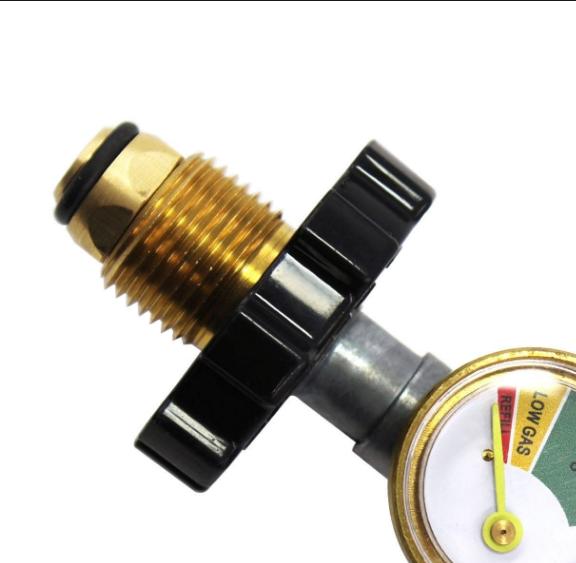
connection fitting that's been around for decades. But what exactly is it, and do you still need
to care about it?
Here's a no-nonsense guide for American users
What is a POL Valve?
POL stands for Prest-O-Lite, the original manufacturer. Technically, it's known as CGA510
(Compressed Gas Association connection number). It's the oldest standard for connecting to
LPG cylinders, and it's still common in the US today, especially on larger tanks.
Where You'll Find It in the US
Unlike Australia ( where POL is being phased out for LCC27), POL valves are still legal and widely
used in the United States. You'll typically find them on:
* Larger propane cylinders( e.g. 40 lb, 100 lb, and larger)
*Older RV and camping cylingders
*Industrial or commercial gas equipment
For smaller portable cylinders (like standard 20 lb grill tanks), you'll usually see a modified version
of the POL valve with added safety features (like OPD-Overfill Prevention Device).
Thread Specs You Need to Know
If you're connecting or replacing a POL valve, here's the technical details: 0.885"-14 NGO-LH-INT
Translation:
* 0.885 inch diameter thread
* 14 threads per inch
* Natinal Gas Outlet form
* Left-hand internal thread (important-righty tighty does NOT apply here)
This same specification is also called Type 21 in Australia, but in the US, stick with CGA510 or POL.
How to Make a Proper Connection
Old-school POL valves rely on a brass-to-brass seal. You tighten a hex nut (often with a spanner) to
get a gas-tight seal. Look for a notch on the hex nut-that tells you it's a left-hand thread.
Newer versions may include a hand wheel and an o-ring or rubber bull nose for easier, leak-free
connections. If you have the older style, make sure you tighten it firmly-but don't voertighten and
damage the threads
Safety Tips for US Users
* Check for leaks after every connection using soapy water. Bubbles mean trouble.
* Left-hand thread reminder: Turn counter-clockwise to tighten.
* Not for all cylinders: Small portable tanks (like 20 lb barbecue cylinders) require OPD valves-don't
swap in a plain POL valve unless you're sure it's allowed.
* Still legal, but know the limits: POL is fine for many applications, but always follow local codes
and cylinder markings.
Final Takeaway
For American users, the POL valve ( CGA510 ) is a reliable, old-school workhorse. It's not going away
anytime soon, especially on larger cylinders. Just remember: left-hand thread, tight brass seal, and
always leak-test.
Whether you'r firing up a patio heater, running a backup propane tank, or maintaining order equipment,
knowing how to handle a POL valve keep you asfe and self-sufficient.
CATEGORIES
LATEST NEWS
CONTACT US
Name: Aaron Choi
Mobile:+8615669220350
Tel:+8657488094903
Whatsapp:8615669220350
Email:sale2@propanefitting.com
Add:No. 315 of Zhenshi Rd. Jiangshan Town, Yinzhou District, Ningbo 315191, China