Blogs
BTU Ratings Gas Cooktops BTU Technical Overview
BTU Ratings on Gas Cooktops: A Technical Overview
Introduction
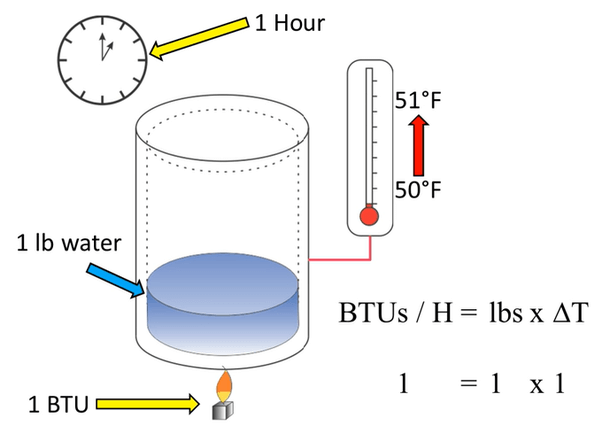
The acronym BTU denotes British Thermal Unit, a thermodynamic unit of energy originated by 19th-century British engineers for
quantifying fuel calorific value. Initially developed to standardize comparisons across coal, gas, and steam power systems,
this measurement remains the industry-standard specification for gas ranges and residential heating equipment.
From an applied perspective, insufficient burner output yields suboptimal culinary results—proteins steam rather than sear,
and thermal mass (e.g., pasta water) requires extended heating durations. BTU ratings directly correlate with available thermal power,
though optimal performance depends on matching output capacity to specific cooking methodologies rather than maximizing absolute values.
Significance of BTU Ratings
In thermodynamic terms, higher BTU/h values correspond to increased thermal flux and reduced time-to-temperature.
Conversely, lower ratings facilitate precise low-temperature applications, including simmering and temperature-sensitive processes
such as chocolate tempering.
Contemporary residential gas cooktops feature burners with differentiated output capacities:
* Standard burners: 5,000–9,500 BTU/h
* High-output burners: 15,000–20,000+ BTU/h
Functional Classification by Output Range
Category
BTU/h Range
Primary Applications
High Output
15,000-22,000
Rapid boiling, protein searing, wok cooking, high-thermal-mass vessels
Medium Output
5,000-9,500
Sauteing, pan-frying, general-purpose cooking
Low/Simmer
3,000-5,000
Sauces, confections, rice, temperature-sensitive preparations
Operational efficiency and cooking ergonomics depend on appropriate burner segmentation. Insufficient high-output capacity
compromises performance for demanding tasks, while excessive output across all burners undermines low-temperature precision.
Technical Specifications and Energy Equivalencies
Residential gas cooktops express burner output as BTU/h (BTU per hour), representing thermal power delivery over time.
This specification functions as a thermal power rating—higher values correlate with accelerated thermal transfer and superior
temperature recovery following cold ingredient introduction.
Unit Conversions
For engineering cross-referencing and international standardization:
* KW = BTU/h × 0.000293071
* BTU/h = kW × 3412.142
Reference Conversion Table
|
BTU/h |
KW (Approx.) |
| 9,000 | 2.64 |
| 12,000 | 3.52 |
| 15,000 | 4.4 |
| 18,000 | 5.28 |
| 20,000 | 5.86 |
These values represent theoretical maximum thermal output under ideal conditions. Actual performance depends on multiple
operational variables.
Performance Variables and Thermodynamic Considerations
Combustion Efficiency Factors
Two burners with identical BTU/h ratings may exhibit divergent real-world performance due to:
Flame geometry and pan interface: Heat transfer efficiency depends on flame tip contact with vessel surfaces.
Combustion products bypassing pan sides represent thermal loss.
Grate design and thermal bridging: Grate geometry affects flame distribution and heat retention.
Cover utilization: Lids affect thermal retention and boil-off rates.
Burner Configuration Optimization
Optimal cooktop design follows a thermal performance hierarchy:
1. One high-output burner (15,000–22,000 BTU/h) for intensive applications
2. Two to three medium-output burners for routine cooking
3. At least one dedicated low-output simmer burner for precision work
Technical Summary
The BTU rating selection process should prioritize functional matching rather than maximum specification.
Key engineering considerations include:
* Thermal load requirements of intended cooking applications
* Heat transfer efficiency variables (pan-vessel geometry, grate configuration)
* Make-up air and ventilation system specifications
* Burner modulation range and low-end stability for precision applications
Critical takeaway:
Appropriate BTU/h selection represents a system-level engineering decision balancing high-output
capacity for intensive tasks with low-output precision for temperature-sensitive processes. The optimal configuration is not maximum output,
but rather thermal capability distribution aligned with operational requirements.
CATEGORIES
LATEST NEWS
CONTACT US
Name: Aaron Choi
Mobile:+8615669220350
Tel:+8657488094903
Whatsapp:8615669220350
Email:sale2@propanefitting.com
Add:No. 315 of Zhenshi Rd. Jiangshan Town, Yinzhou District, Ningbo 315191, China