Blogs
Something You Need To Know: The POL & LCC27 Gas Fittings
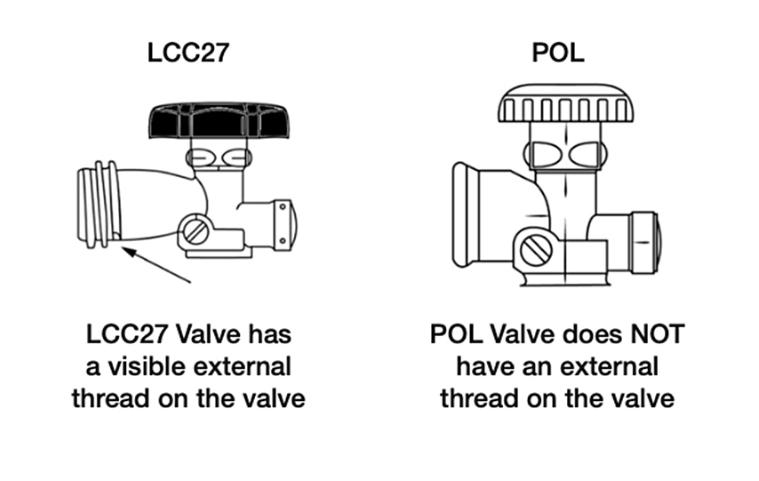
If you're used to the old POL valve on your BBQ gas cylinder, there's a new fitting in town. It's called the LCC27,and it's changing the way
we connect LPG cylinders to grills, patio heaters, and camping gear.
Here's everything you need to know-no fluff, just the facts.
What Is the LCC27 Fitting?
The LCC27 is a new gas cylinder connection designed to replace the aging type 21 ( also known as POL) fitting oncommon 4kg and 9kg LPG
cylinders. These are the tanks you typically use for BBQs and outdoor leisure appliances.This change affects both the cylinder valve and the
hose fitting on your applicance.
Why the Switch?
Let's be honest-POL fittings have always had safety issues. The problems were:
* A safe connection depended entirely on how tightly you cranked the nut.
* The thread tightened in the opposite direction of every otherr screw or bolt you've ever used (left-handed thread).
* Gas could flow whenever the valve was opened, even if no applicace was attached.
All of these factors made gas leaks more likely. The LCC27 fixes every single one.
What the New Fitting Offers
The LCC27 is safer and much easier to use. Here's what you get:
* Built-in check valve: Gas cannot flow unless an appliance is securely attached.
* Gas seal before check valve opens: You get a seal regardless of how tight you turn the nut.
* Right-handed ACME thread: Intuitive and visible. Turn it the normal way.
* Large plastic nut: Easy to grip. Bonus: it softens in a fire, allowing the fitting to eject and stopping gas flow automatically.
Which Cylinders Get the LCC27?
This change applies to 9kg and 4-4.5kg cylinders that currently have a POL valve. Camping cylinders with upright 3/8 BSP fittings and large
45kg domestic cylinders are not affected. This also does not apply to natural gas or small disposable butane canisters.
When Is This Happening?
The rollout happened in stages:
* April 1, 2021: Suppliers began fitting LCC27 to new cylinders.
* October 1, 2021: LCC27 became dandatory for new cylinders. Old POL cylinders could no longer be sold, but existing ones in circulation could
keep their POL valve until their 10-year retest date. At retest, they must be upgraded to LCC27.
* April 1, 2022: New appliances and hoses with LCC27 fittings became mandatory.New appliances with POL fittings could still be sold after these dates, as long as they are compatible with LCC27 cylinders (which they are-more
on that below).
What This Means for Your Existing POL Gear
If you have a POL cylinder and a POL appliance, keep using them as normal. Nothing changes untill yourcylinder hits 10-year test date. At that point,
the cylinder gets a new LCC27 valve.
Here's the good news: The LCC27 valve is backwards-compatible. That means your old POL appliance will still work with a new LCC27 cylinder.
But there's the catch: A new appliance with an LCC27 fitting will not connect to an old POL cylinder. If you swap cylinders at an exchange service, you
might get a mix of POL and LCC27 valves for years to come. So if you own an LCC27 appliance, make sure you swap your cylinder for one with an
LCC27 valve.
A Warning About Rubber Nose Fittings
If your POL fitting has a rubber "nose" on the end, be careful. When you remove the hose, that rubber piece can get left behind iniside the LCC27 valve.
This can jam the valve and ruin your POL hose fitting for next time.
Should You Use Adapters?
In theory, adapters exist. But here's the short answer: avoid them if you can.
Every adapter adds a potential leak point. More importantly, for caravans, campers, and motorhomes covered by standard AS/NZS 5601, adapter are
specifically prohibited.
For portable camp stoves and BBQs attached directly to a cylinder, the rules are less clear. But the common advice is: do not use an adapter to connect
an LCC27 appliance to a POL cylinder. Why?
Because the thread direction change means tightening one side could loosen the other side. That's a recipe for disaster.If you absolutely must use an adapter for a small appliance, remove it for transport. Once the adapter is attached, the check valve is open-gas will flow
anytime the cylinder valve is opened.
Replacement Hoses
Replacement hoses with LCC27 fittings are available. If your flexible gas hose is more than 10 years old, it's time to replace it anyway-so now is a good
time to switch to LCC27.
Refilling Cylinders
No change here. Cylinders with POL valves that are still in date can still be refilled. The only difference is the fitting used by the refilling equipment.
What About RVs and Campers?
Caravans (what Americans call travel trailers or RVs) manufactured after April 1, 2022, are required to have LCC27 fittings. Older RVs should have
their flexible hoses replaced every 10 years anyway.
The next time you take your RV in for service, have the hoses and fittings changed over at the same time. Just make sure your gas cylinders are nearly
empty before you do.
The Bottom Line for US Readers
This article is written from an Australian perspective, but if you're in the US, here's what to watch for: The LCC27 standard may eventually make its way to
American cylinders. For now, POL (CGA510) is still commom in the US. But if you see LCC27 fittings on imported appliances or newer equipment, now you
know how they work and why they're safer.
The key takeaway? LCC27 is safer, easier, and backwords-compatible. POL appliances work on LCC27 cylinders. But LCC27
appliances do NOT work on POL cylinders. Plan accordingly.
CATEGORIES
LATEST NEWS
CONTACT US
Name: Aaron Choi
Mobile:+8615669220350
Tel:+8657488094903
Whatsapp:8615669220350
Email:sale2@propanefitting.com
Add:No. 315 of Zhenshi Rd. Jiangshan Town, Yinzhou District, Ningbo 315191, China