Blogs
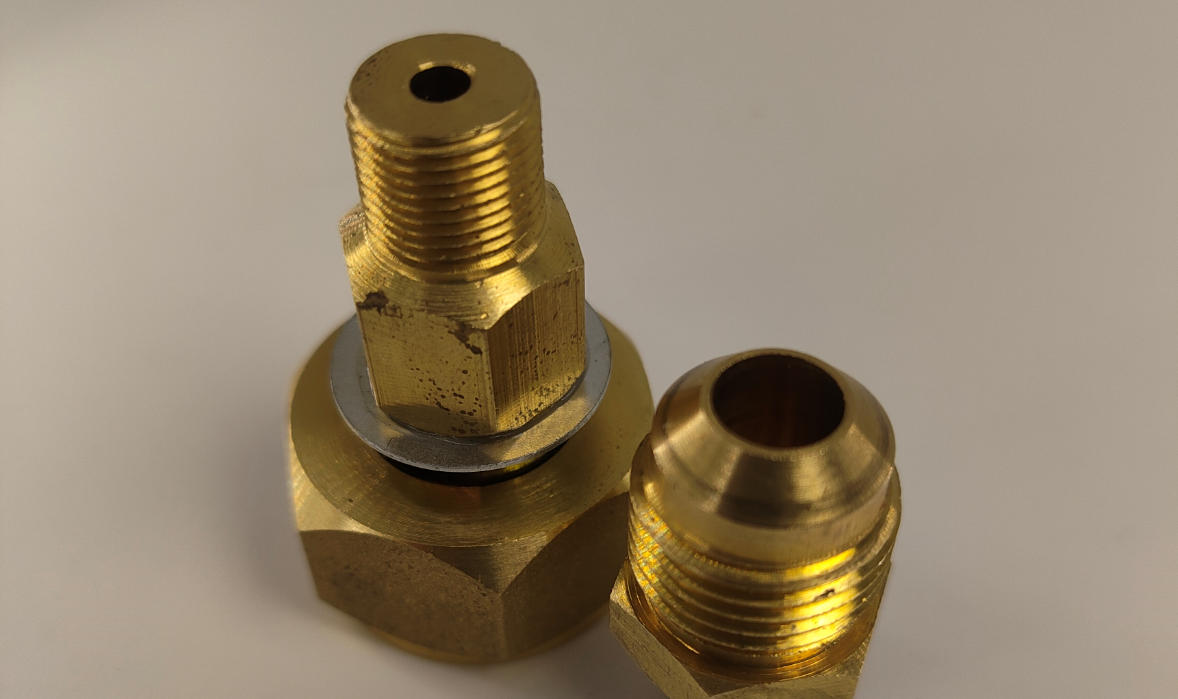
Inverted Flare vs. Pipe Thread: A Technical Comparison
Inverted Flare vs. Pipe Thread: A Technical Comparison
In fluid power systems, industrial piping, and automotive engineering, connection integrity is paramount.
Two fundamentally different connection methods dominate the industry: Inverted Flare and Pipe Thread systems. Understanding their distinct sealing principles advantages, and limitations is essential for ensuring system reliability and safety
Part I: Pipe Thread Connections
Design Principles
Pipe threads, particularly the National Pipe Tapered (NPT) standard, rely on tapered thread geometry for connection. The 1:16 taper creates progressive interference as
components tighten, generating both mechanical attachment and—with assistance—sealing action.
The Critical Role of Sealants
Contrary to common belief, tapered threads alone cannot achieve reliable sealing. Microscopic helical leak paths inherently exist along the thread spiral, necessitating sealants:
-
PTFE tape: Fills gaps while providing lubrication
-
Thread compounds: Anaerobic materials curing without air
-
Pipe dope: General-purpose semi-permanent sealants
The sealant material deforms under compression, occupying spiral clearances and creating a continuous barrier.
Advantages
-
Universal availability: Countless configurations worldwide
-
Cost-effectiveness: Simple machining keeps costs low
-
Tool simplicity: Standard wrenches only
-
Field repairability: Easily modified or replaced
Limitations
-
Vibration susceptibility: Gradual loosening under dynamic loading
-
Installation variability: Heavily dependent on operator technique
-
Temperature limitations: Sealant degradation at extremes
-
Torque sensitivity: Under-tightening leaks; over-tightening cracks
Typical Applications
-
Stationary industrial piping
-
Compressed air distribution
-
Water treatment facilities
-
Medium-pressure hydraulics
-
General plumbing and HVAC
Part II: Inverted Flare Connections
Mechanical Architecture
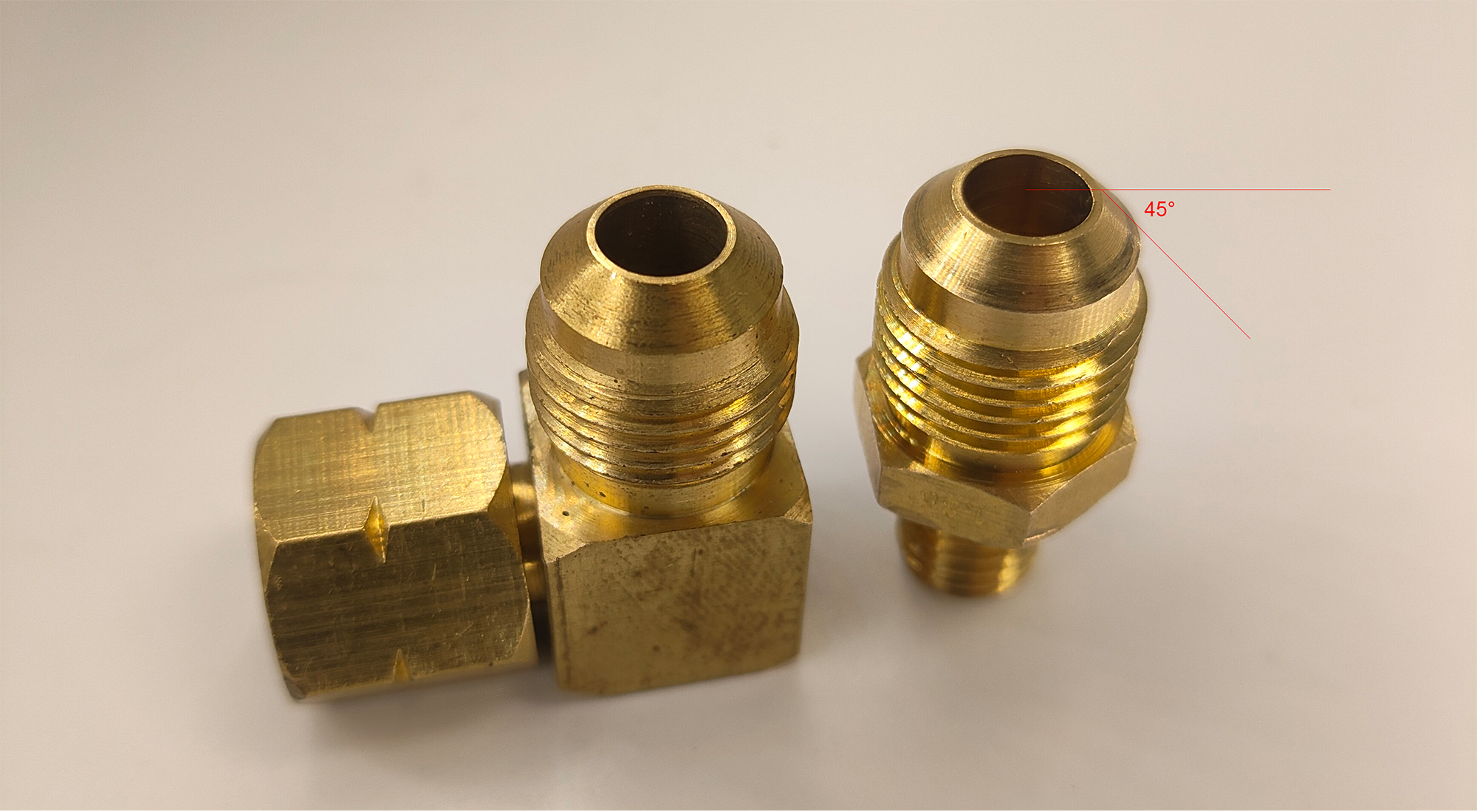
The inverted flare connection emerged from automotive and aerospace demands for vibration-resistant, absolute-seal integrity. It fundamentally separates sealing from threading functions.
A complete assembly consists of:
-
Connector body: Contains precision 45° conical seat
-
Flared tubing: Tube end formed to matching 45° bell shape
-
Flare nut: Draws flare against seat
The term "inverted" describes the recessed sealing cone within the connector body.
Sealing Mechanism
Pure Metal-to-Metal Contact
Inverted flares achieve sealing through mechanical interference between precision-machined surfaces:
-
Surface conformity at matching 45° angles
-
Controlled elastic deformation during tightening
-
Hoop stress creating intimate annular contact
-
Pressure activation enhancing seal tightness
Thread Function
Threads serve purely mechanical purposes:
-
Providing clamping force only
-
No sealing function whatsoever
-
Sealants strictly contraindicated
Advantages
-
Exceptional vibration resistance: Rigid metal contact resists loosening
-
High pressure capability: Withstands extreme system pressures
-
Temperature tolerance: No organic materials to degrade
-
Repeatable assembly: Multiple cycles without degradation
-
Zero leak potential: When properly formed
-
Chemical compatibility: Metal construction suits virtually all fluids
Critical Requirements
Specialized Tooling
Successful connections demand:
-
Precision flaring tools
-
Deburring equipment
-
Controlled torque specifications
Material Considerations
-
Copper: Easily formed, common in refrigeration
-
Steel/Stainless: Requires greater force, specialized tooling
-
Aluminum: Requires careful technique to prevent cracking
Limitations
-
Higher initial cost plus tooling investment
-
Installation skill requirement
-
Space constraints for flare nut access
-
Tube preparation criticality
-
Damaged flares require cutting and re-flaring
Primary Applications
-
Automotive brake systems (SAE J512)
-
Fuel injection and delivery
-
Refrigeration and air conditioning
-
Aerospace hydraulics
-
High-pressure test stands
Part III: Comparative Analysis
|
Parameter |
Inverted Flare |
Pipe Thread |
|
Pressure rating |
Up to 5,000+ psi |
150-3,000 psi typical |
|
Vacuum suitability |
Excellent |
Good with sealants |
|
Vibration resistance |
Superior |
Marginal |
|
Temperature range |
Material-limited |
Sealant-limited |
|
Leak potential |
Near-zero |
Sealant-dependent |
|
Field repairability |
Requires tooling |
Simple tools only |
Cost Considerations
Initial Investment
-
Inverted flare: Higher component costs plus tooling
-
Pipe thread: Minimal tooling, lower per-unit cost
Lifecycle Costs
-
Inverted flare: Lower maintenance, extended service life
-
Pipe thread: Potential recurring leakage issues
Selection Framework
Choose Inverted Flare When:
-
Significant vibration present
-
Pressures exceed 1,500 psi
-
Zero leakage absolutely required (brakes, hazardous fluids)
-
Temperature extremes preclude organic sealants
-
Repeated assembly/disassembly needed
Choose Pipe Thread When:
-
Connections are primarily static
-
Pressures remain moderate
-
Field installation without specialized tools
-
First cost dominates selection
-
Future disassembly infrequent
Part IV: Industry Standards
Inverted Flare Standards
-
SAE J512: Automotive tube fittings
-
SAE J533: Flares for tubing
-
ISO 8434-1: Metric 24° cone fittings
Pipe Thread Standards
-
ANSI/ASME B1.20.1: NPT threads
-
ISO 7-1: Pressure-tight pipe threads
-
BS EN 10226: BSPT standards
Conclusion
The distinction between inverted flare and pipe thread represents fundamentally different engineering philosophies. Pipe threads offer accessibility and
economy through distributed sealing responsibility across threads and sealants. Inverted flares achieve reliability through concentration of sealing function
at a precision metal interface.
CATEGORIES
LATEST NEWS
CONTACT US
Name: Aaron Choi
Mobile:+8615669220350
Tel:+8657488094903
Whatsapp:8615669220350
Email:sale2@propanefitting.com
Add:No. 315 of Zhenshi Rd. Jiangshan Town, Yinzhou District, Ningbo 315191, China